Examining Directory Categorization Frameworks That Organize Mobile Live Game Access Alongside Customized No-Cost Promotions Across International Networks
Written by Yara Lange · Jul 16, 2026
Examining Directory Categorization Frameworks That Organize Mobile Live Game Access Alongside Customized No-Cost Promotions Across International Networks
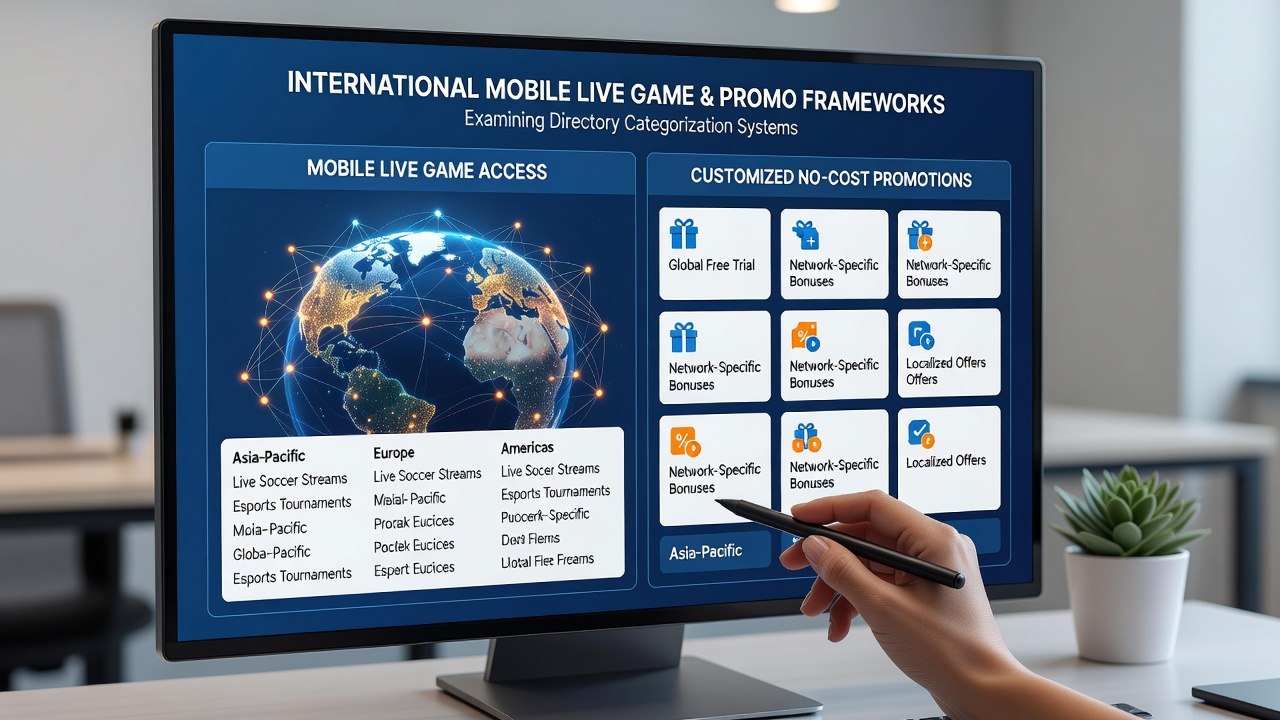
Directory categorization frameworks have evolved into structured systems that sort mobile live game offerings while aligning them with region-specific no-cost promotions. These frameworks rely on layered taxonomies that group games by dealer format, device compatibility, and jurisdictional eligibility before matching them to bonus structures that require no initial deposit. Data from multiple markets shows that such organization improves navigation efficiency across apps and web portals.
Core Components of Modern Categorization Systems
Frameworks typically begin with primary buckets that separate live dealer titles from RNG-based options, then apply secondary filters for mobile-specific features like touch-optimized interfaces and low-latency streaming. Observers note that tertiary layers incorporate player location data to surface promotions available only in approved jurisdictions, creating pathways that connect game access directly to tailored incentives. Researchers at industry analysis firms have documented how these multi-tier systems reduce search friction by presenting relevant options within the first few interactions on a smartphone screen.
Live game categories often subdivide further into blackjack tables, roulette wheels, baccarat rooms, and hybrid variants that blend multiple mechanics. Each subdivision links to promotional rules that specify eligibility windows, maximum redemption values, and wagering requirements attached to the free credits or spins. This linkage ensures that users in one market see different offers than those in another even when accessing the same underlying game library.
International Network Adaptations
Networks spanning North America, Europe, and parts of Asia implement distinct rule sets within the same overarching framework. North American directories prioritize state-level licensing tags that determine which no-cost promotions activate for residents of regulated markets, whereas European systems emphasize cross-border compliance tags tied to multiple licensing authorities. In July 2026 several platforms updated their categorization engines to accommodate new data-sharing protocols between operators and directory services, allowing real-time adjustment of visible promotions based on shifting regulatory approvals.
Canadian frameworks, for instance, integrate provincial iGaming rules that affect bonus display while Asian networks focus on language localization and payment method compatibility that indirectly shapes which zero-cost offers appear alongside live tables. According to figures released by the American Gaming Association, these adaptations have contributed to measurable increases in session continuity on mobile devices across participating jurisdictions.
Technical Integration of Game Access and Promotions
Modern directories employ API connections that pull live game availability from operator servers and simultaneously query promotional databases for matching incentives. When a user selects a categorized live blackjack room, the system checks device location, account status, and historical engagement metrics to determine whether a customized no-deposit reward displays. This process operates through rule-based engines that prioritize compliance while maximizing visibility of eligible offers.

Experts have observed that the integration layer often includes fallback mechanisms for users whose locations fall outside active promotion zones, defaulting to general information about upcoming offers rather than immediate access. Such design choices maintain regulatory boundaries while still guiding players toward future participation opportunities across international networks.
Emerging Patterns in July 2026
During July 2026 several directory operators introduced dynamic subcategory expansions that track emerging live game formats such as multi-camera immersive tables and augmented-reality dealer interactions. These additions required updates to promotional matching logic so that no-cost rewards could be calibrated to new engagement thresholds, including minimum session times or specific feature activations within the live environment. Reports from the European Gaming and Betting Association indicate that early adoption of these expanded categories has already influenced how operators structure their mobile bonus inventories.
teh same period saw increased emphasis on cross-device synchronization, allowing a user who begins a live game session on a smartphone to continue receiving associated promotional progress on a tablet without resetting eligibility parameters. This continuity depends on unified categorization tags that travel with the user profile across endpoints.
Conclusion
Directory categorization frameworks continue to refine the relationship between mobile live game access and customized no-cost promotions by maintaining precise, jurisdiction-aware taxonomies. The technical linkages established in these systems support compliant delivery of incentives while adapting to regulatory and technological shifts observed through mid-2026. Ongoing development in this area centers on further automation of matching processes and expansion of subcategory granularity to accommodate evolving live game formats across global networks.