How Engagement Metrics Drive Custom Feature Unlocks Across Integrated Mobile Gambling Interfaces
Written by Ellis Zimmermann · Jun 13, 2026

How Engagement Metrics Drive Custom Feature Unlocks Across Integrated Mobile Gambling Interfaces
Engagement metrics form the backbone of personalization strategies in mobile gambling applications, where data points such as session duration, interaction frequency, and in-app navigation patterns directly influence when and how custom features become available to individual users. Platforms track these indicators in real time, then apply algorithms that determine unlock thresholds based on observed behavior rather than uniform schedules.
Core Metrics That Shape Feature Access
Session length stands out as a primary driver, with systems often requiring users to reach specific time thresholds before advanced customization options activate, while bet frequency and variety add layers that trigger progressive unlocks like personalized bonus structures or interface modifications. Data from integrated platforms shows that users who complete multiple distinct game types within a single session experience accelerated feature releases compared to those who stick to one activity.
Navigation depth and return visit consistency further refine these processes, allowing interfaces to adapt by revealing tailored elements such as custom leaderboard placements or exclusive game variants once certain engagement benchmarks register. Researchers note that these metrics operate through layered scoring systems that weigh recent activity more heavily than historical totals in many cases.
Mechanics Behind Custom Unlocks
Integrated mobile systems connect engagement data to backend servers that process signals from user devices, then push notifications or interface changes when predefined combinations of metrics align. This creates a dynamic environment where one user might unlock a unique reward multiplier after sustained play across linked games, whereas another receives interface shortcuts based on rapid navigation patterns.
Developers design these mechanisms to respond to aggregate trends across user cohorts, yet the delivery remains individualized through profile-specific adjustments. Observers note that the process relies on secure data pipelines that maintain compliance with regional standards while enabling seamless transitions between standard and customized modes.
Integration Patterns in Mobile Platforms
Modern mobile gambling interfaces embed these metric-driven systems into core navigation flows, so that elements like progressive jackpot access or live dealer preferences surface automatically once engagement signals meet criteria. This integration extends across multiple device types, ensuring consistent behavior whether users switch between phones and tablets during extended sessions.
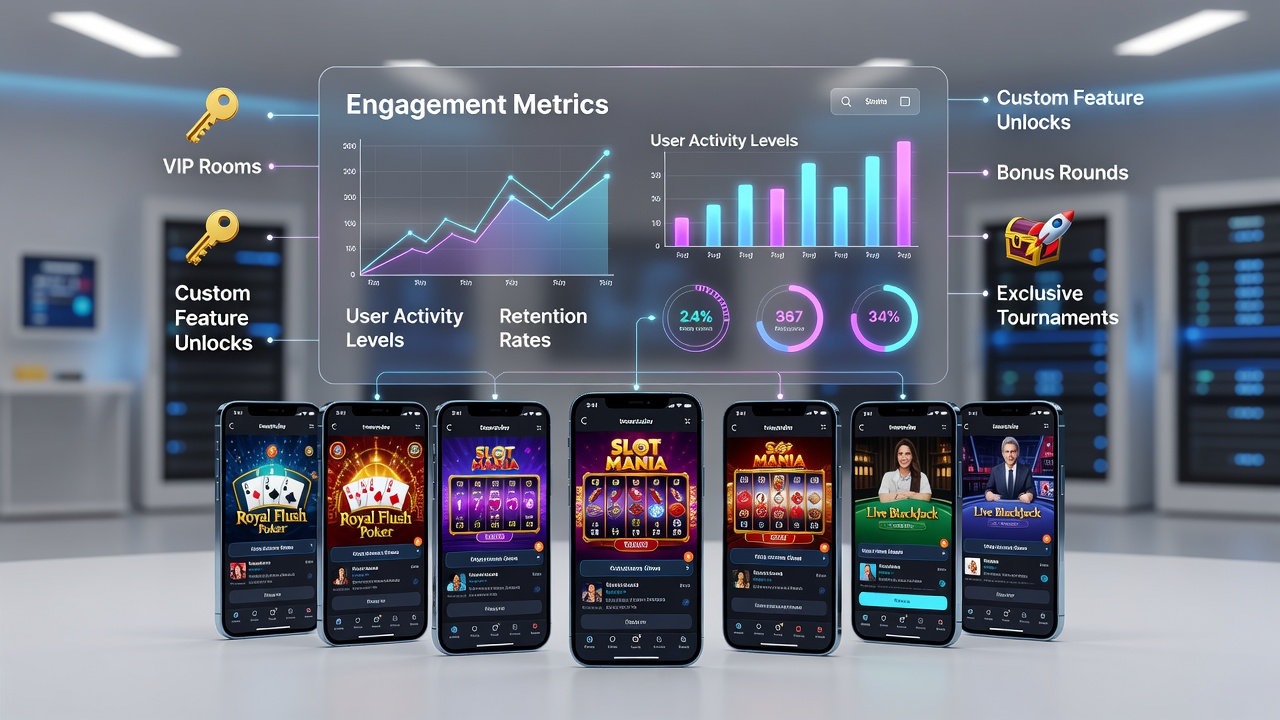
Cross-platform synchronization plays a key role here, as metrics collected on one device inform unlocks that appear on another without requiring manual resets. Platforms achieve this through unified user accounts that aggregate activity across sessions, creating continuous profiles that evolve based on cumulative interactions rather than isolated events.
Developments Observed in Mid-2026
By June 2026, several operators had expanded their metric frameworks to incorporate predictive elements that anticipate user preferences before explicit actions occur, leading to preemptive feature suggestions tied to early session signals. Reports from the New Jersey Division of Gaming Enforcement highlight increased adoption of such systems among licensed mobile providers operating in the state during this period.
These updates coincided with broader industry shifts toward real-time analytics that adjust unlock conditions dynamically based on population-level data shifts, rather than static rules. One study from a Canadian research institution documented measurable differences in feature activation rates following these refinements, particularly in markets with high mobile penetration.
Examples from Operational Platforms
Take one operator that adjusted its unlock logic to prioritize variety in game selection, resulting in users gaining access to custom tournament entries after engaging with three or more categories within a set timeframe. Another platform applied similar logic to social features, unlocking group play options once return frequency crossed established thresholds.
These cases illustrate how metric thresholds translate into tangible interface changes, with the process remaining transparent enough for users to understand basic progression paths while keeping exact calculations proprietary. Industry associations such as the Canadian Gaming Association have published summaries of these approaches in technical overviews that focus on implementation standards.
Conclusion
Engagement metrics continue to serve as the primary mechanism for determining custom feature availability in integrated mobile gambling environments, creating responsive systems that adapt to individual patterns without manual intervention. As platforms refine their data handling capabilities, the connections between observed behavior and unlock events grow more precise, supporting sustained user interaction across diverse interface elements. The approach relies on established tracking methods and regional compliance frameworks that evolve alongside technological capabilities.