How Regional Compliance Frameworks Influence Customization of Deposit-Free Rewards in Multi-Platform Gaming Networks
Written by Theo Simon · Aug 22, 2026
How Regional Compliance Frameworks Influence Customization of Deposit-Free Rewards in Multi-Platform Gaming Networks
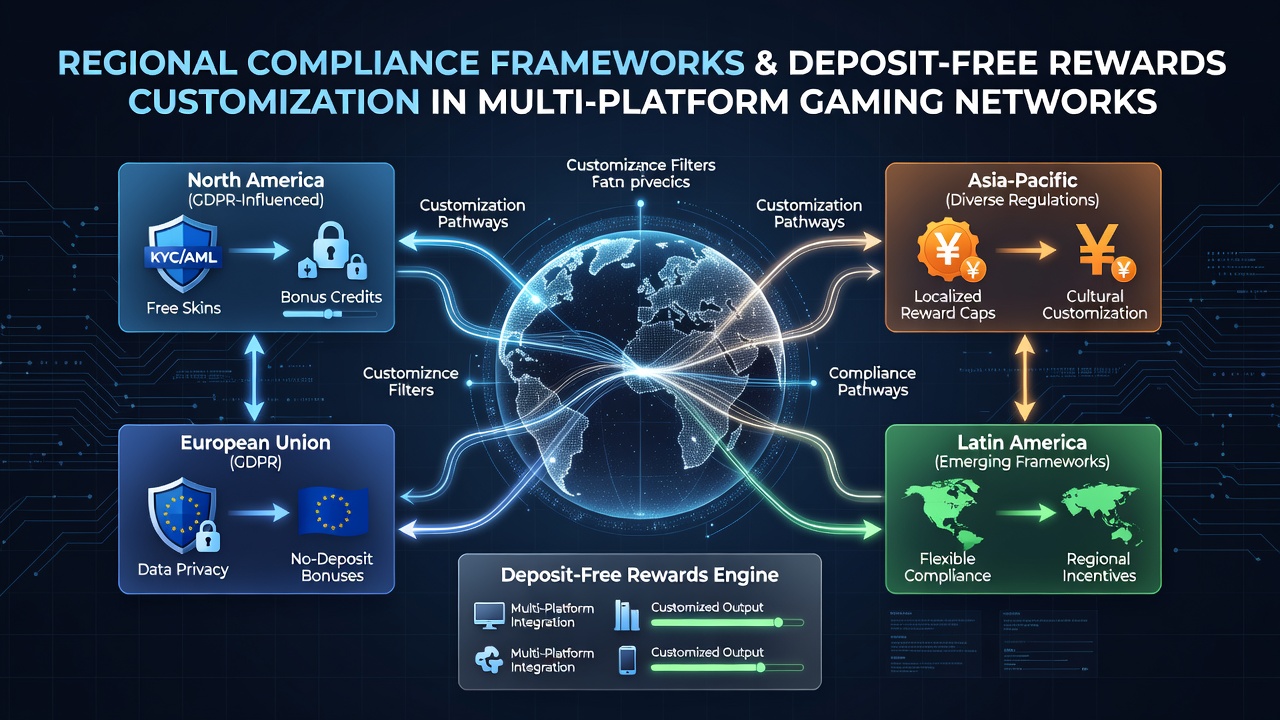
Regional compliance frameworks shape how gaming operators design and deliver deposit-free rewards across mobile, desktop, and console platforms in interconnected networks. Different jurisdictions impose distinct requirements on verification procedures, bonus structures, and data handling that force companies to adjust reward mechanics rather than apply uniform global offerings. Operators must segment their systems to match local rules while maintaining seamless user experiences across devices.
Key Regulatory Differences by Region
North American markets illustrate the point clearly. State-level rules in places like New Jersey and Pennsylvania require specific player authentication steps before any deposit-free reward activates, which leads developers to build conditional triggers into their apps and web portals. Canadian provincial frameworks add another layer by mandating clear disclosure of reward terms in both English and French, prompting multilingual customization layers that sync across platforms. In contrast, Australian regulations focus on harm minimization, so operators cap the frequency and value of zero-cost incentives and tie them to responsible gaming tools that function differently on mobile versus desktop interfaces.
European Union member states apply varying interpretations of the same overarching directives, which creates further fragmentation. Some countries enforce strict session-time limits that reset reward eligibility, while others emphasize cross-border data transfer protocols that affect how user profiles carry over between platforms. Operators respond by maintaining separate reward engines for each market cluster rather than relying on a single centralized system.
Technical Adjustments in Multi-Platform Environments
Multi-platform networks require codebases that detect user location and device type simultaneously before presenting any deposit-free offer. When a player switches from a smartphone app to a browser-based session, the system must reapply regional filters without interrupting gameplay flow. Data from August 2026 shows several major networks rolled out updated geofencing modules that integrate real-time compliance checks with reward eligibility algorithms, reducing mismatches that previously triggered regulatory flags.

These adjustments extend to backend reporting as well. Regulators in multiple jurisdictions now demand granular logs that separate reward redemptions by platform and region, so developers embed timestamped audit trails directly into the reward delivery code. One operator handling operations across three continents restructured its entire bonus database to accommodate daily reporting exports required under evolving Canadian and Australian standards.
Case Examples from Industry Practice
Observers note how one European-facing network modified its free credit system after updates to national gaming statutes took effect in mid-2026. The company introduced platform-specific reward pools: mobile users received smaller but more frequent offers that complied with session caps, while desktop sessions unlocked larger one-time credits tied to longer verification windows. Similar patterns appear in North American markets where operators align deposit-free promotions with state-specific advertising restrictions that differ between apps and websites.
Industry reports from the American Gaming Association highlight how aggregated compliance data now drives feature flags that activate or suppress reward options automatically. These flags connect directly to regional databases maintained by oversight bodies, allowing real-time updates without full code redeployment across every platform.
Data Handling and Verification Requirements
Verification processes form another major influence. Regions that demand government-issued ID uploads before reward activation force operators to build conditional flows that pause reward delivery until checks complete. Platforms must store verification status separately for each jurisdiction to avoid cross-contamination of data pools. Research from academic studies on digital gambling infrastructure indicates that such segmented storage increases both development costs and maintenance complexity but remains essential for ongoing regulatory approval.
Cross-border data protocols further complicate customization. Networks operating in multiple continents must route user information through approved servers located within each jurisdiction's borders, which affects how quickly reward eligibility can be determined when a player travels or changes devices. Several providers implemented edge-computing solutions in August 2026 to reduce latency while still satisfying location-specific data residency rules.
Conclusion
Regional compliance frameworks continue to dictate the precise shape of deposit-free rewards in multi-platform gaming environments through layered requirements on verification, value limits, disclosure, and data management. Operators maintain distinct customization layers that respond to each jurisdiction's rules while preserving functional consistency across mobile, web, and other access points. As regulatory landscapes evolve, the technical architecture of reward systems must keep pace with these geographic differences to sustain compliant operations at scale.