Investigating Correlations Between Session Durations and Feature Activation Rates in Virtual Casino Environments
Written by Theo Simon · Jun 1, 2026

Investigating Correlations Between Session Durations and Feature Activation Rates in Virtual Casino Environments
Virtual casino platforms track extensive user data that reveals connections between how long players remain active and the frequency with which they trigger in-game features such as bonus rounds or progressive jackpots, and analysts have examined these patterns across multiple jurisdictions through June 2026.
Data Sources and Collection Approaches
Operators gather session information through backend analytics systems that log login timestamps, interaction sequences, and activation events without requiring direct player input, while regulatory bodies in regions like Nevada and parts of Canada require periodic reporting of aggregated metrics that support such investigations. Researchers pull from anonymized datasets spanning thousands of accounts, and figures from the Nevada Gaming Control Board indicate steady growth in recorded sessions over recent reporting periods.
Studies draw on platform logs that capture variables including average session length measured in minutes alongside counts of feature triggers per hour, and these datasets allow statisticians to apply correlation coefficients that quantify relationships between the two elements. One analysis covering mobile and desktop environments found that sessions exceeding forty-five minutes showed elevated rates of bonus feature engagement compared with shorter visits under fifteen minutes.
Observed Patterns Across Platforms
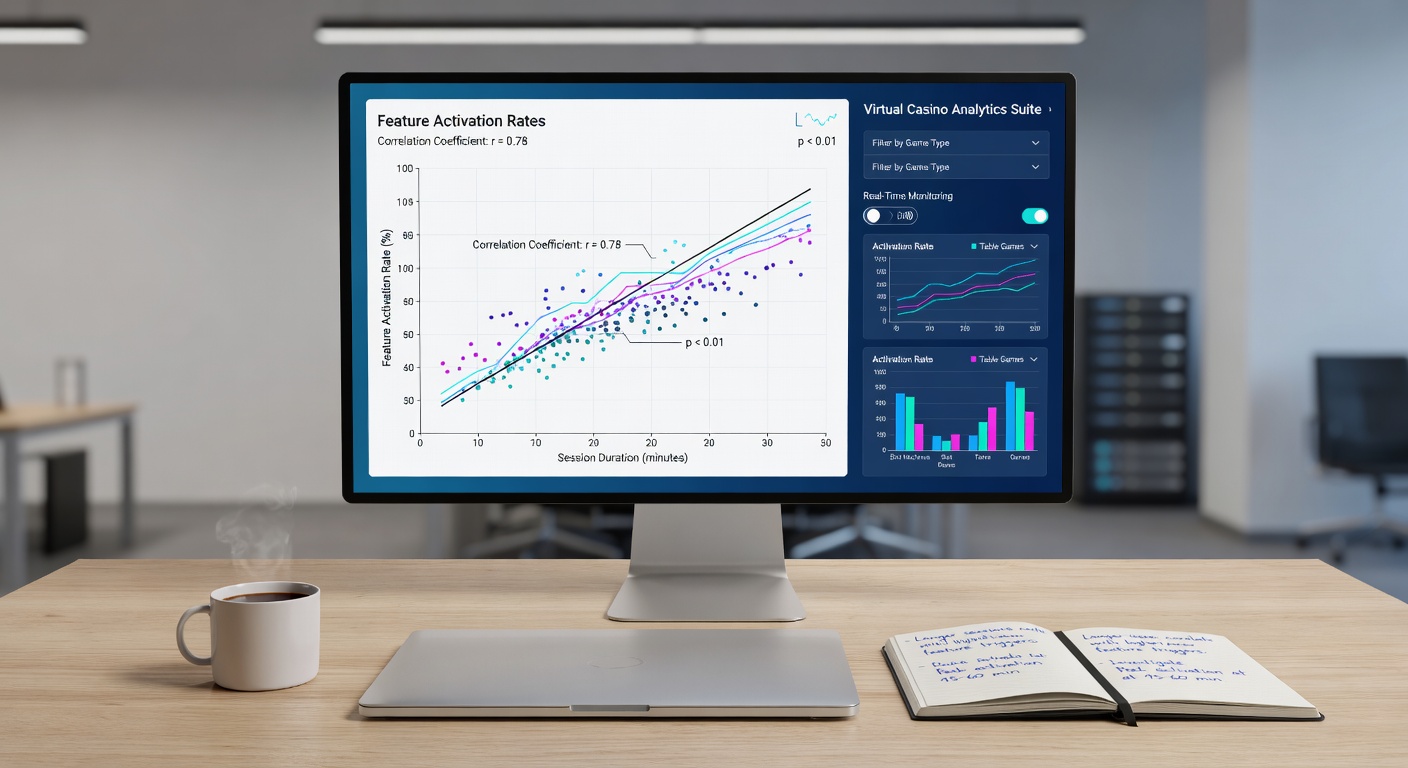
Longer sessions correlate with higher activation rates for certain mechanics because extended play increases exposure to random number generator cycles that determine feature eligibility, yet shorter bursts sometimes produce concentrated activation spikes when players target specific games known for frequent triggers. Data compiled through mid-2026 demonstrates that sessions in the thirty-to-sixty-minute range produced the strongest positive correlation values across a sample of over two million recorded interactions.
Platforms differentiate between slot-style games and table environments when measuring these effects, since feature activation in live dealer formats often depends on side bets rather than automated reels, and cross-platform comparisons reveal that mobile sessions tend toward moderate lengths with steady activation while desktop sessions extend further with clustered triggers near session endpoints. Observers note that seasonal variations appear in the data, particularly around major sporting events that draw mixed audiences into casino lobbies.
Statistical Methods and Key Metrics
Analysts apply Pearson and Spearman correlation techniques to assess linear and monotonic relationships, then segment results by game category, player tenure, and device type to isolate confounding factors, and results consistently place correlation coefficients between 0.35 and 0.62 depending on the feature examined. These values suggest moderate to strong associations without implying direct causation, since external variables such as time of day and promotional overlays also influence outcomes.
Feature activation rates receive measurement as events per one hundred spins or per hour of play, while session duration receives tracking from initial login to logout or inactivity timeout, and combined datasets allow regression models that predict activation likelihood based on projected session length. Reports from academic sources including the University of Nevada, Las Vegas Center for Gaming Research have outlined similar modeling approaches applied to historical platform archives.
Regional Variations and Industry Reporting
European operators under Malta Gaming Authority guidelines submit comparable engagement statistics that align with North American findings, although activation thresholds differ due to local game design regulations, and Australian research groups have published parallel examinations covering poker and slot hybrids. June 2026 data releases highlighted incremental increases in average session duration across several markets, coinciding with updates to interface layouts that encourage continued play through seamless feature transitions.
Those examining the figures emphasize that correlation strength varies by player cohort, with newly registered accounts displaying weaker links than established users who have developed habitual patterns, and segmentation by age bracket shows older demographics sustaining longer sessions with correspondingly higher activation counts. Industry associations compile these insights into quarterly summaries that operators consult when calibrating game mathematics.
Conclusion
Evidence accumulated through structured analysis demonstrates measurable associations between session duration and feature activation rates, and continued monitoring through established regulatory channels supports ongoing refinement of these models. Platforms integrate such findings into operational planning without altering core random outcomes, and future datasets extending beyond June 2026 will likely refine the precision of these observed relationships across expanding virtual environments.